
WIFI development board with ESP-8266EX chip offering Arduino compatibility and OTA wireless upload, features 11 digital I/O pins and 1 ADC input, includes onboard 5V 1A switching power supply for microcontroller projects.


WIFI development board with ESP-8266EX chip offering Arduino compatibility and OTA wireless upload, features 11 digital I/O pins and 1 ADC input, includes onboard 5V 1A switching power supply for microcontroller projects.
ESP-8266EX WIFI Development Board with Arduino Compatibility and Onboard Power
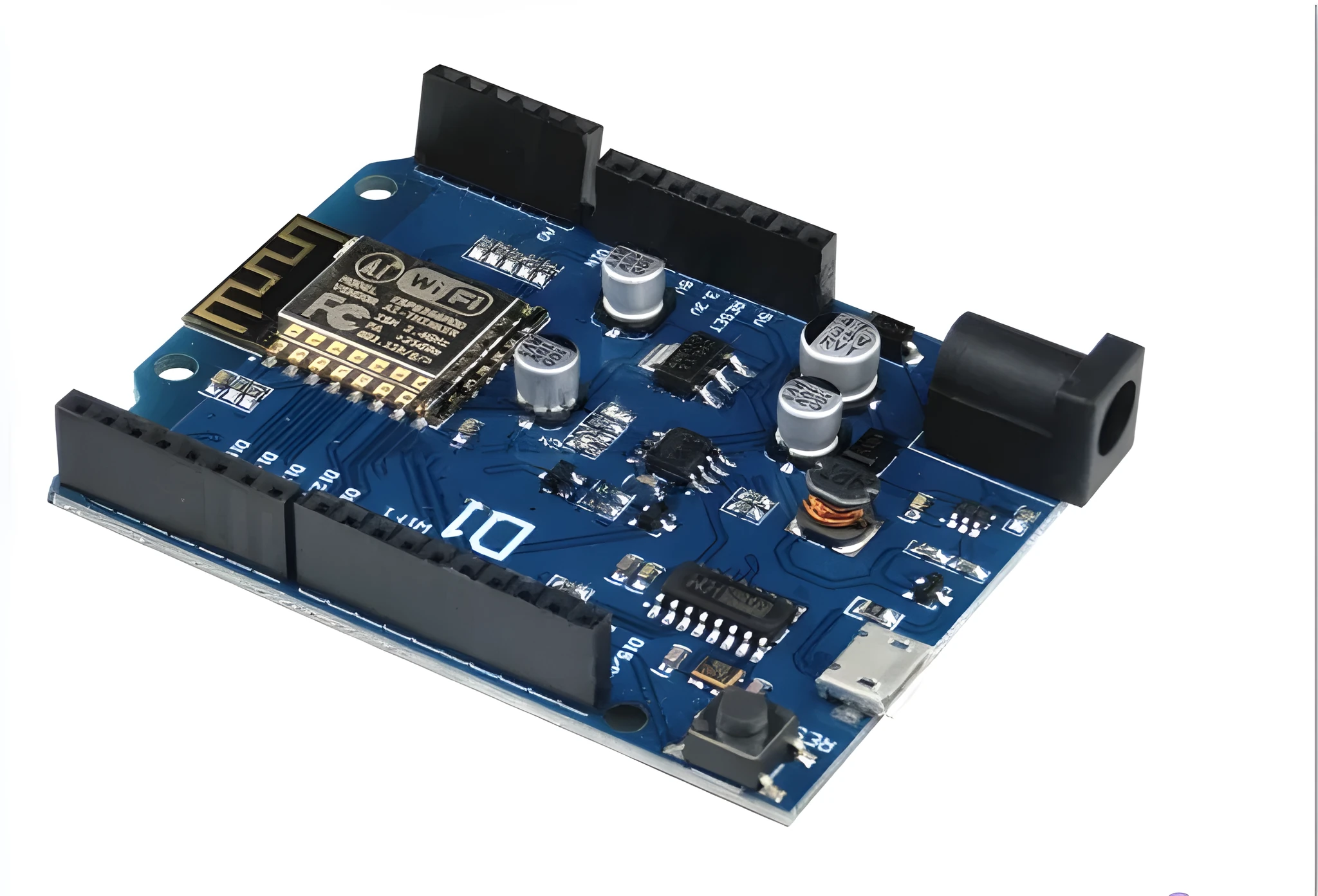
This WIFI development board centres around the popular ESP-8266EX chip, providing a robust and accessible platform for creating Internet of Things (IoT) projects and connected devices. Its primary advantage lies in its seamless integration with the Arduino development environment, making it an approachable choice for hobbyists and developers familiar with Arduino's ecosystem. The inclusion of an onboard switching power supply further reduces project complexity by handling power conversion, allowing you to focus on application logic and connectivity.
Features and Construction

The board's functionality is defined by a specific set of hardware features designed for flexible project development. Its construction is based on a standard PCB housing the core ESP-8266EX chip and supporting circuitry.
Material and Build
The board is constructed using standard electronic manufacturing materials, primarily a fibreglass PCB populated with the ESP-8266EX chip, voltage regulator components for the onboard power supply, and the necessary pin headers. The build quality is focused on providing reliable connectivity for the I/O pins and stable power delivery from the integrated 5V 1A switching regulator, which accepts a wide input range up to 24V.
Size and Practical Fit
While exact physical dimensions are not specified, the board's layout includes 11 digital I/O pins and 1 analog input pin, suggesting a form factor designed for prototyping and integration into projects. Its operational similarity to an Arduino UNO indicates it is intended for use on breadboards or within custom enclosures typical for microcontroller development.
Uses and Placement
This development board is suited for a range of applications requiring wireless connectivity and microcontroller control. Its compatibility dictates its placement in both educational and prototyping scenarios.
Event or Professional Use
For professional prototyping or IoT product development, this board serves as a valuable tool for validating WIFI-based concepts. The OTA (Over-The-Air) wireless upload capability is particularly useful for deploying updates to devices in the field or in hard-to-reach installations, streamlining the development and maintenance cycle for connected systems.
Everyday Home Use
Hobbyists and makers can utilise this board for smart home projects, such as environmental sensors, wireless controllers, or data loggers. The Arduino compatibility means a vast library of existing code examples and community support is available, lowering the barrier to entry for creating custom automated solutions.
Benefits and Buying Value
The value of this development board lies in its integration of several key functionalities into a single, programmer-friendly platform.
Reuse and Low Maintenance
The board is designed for repeated use across multiple projects. Its standard pinout and Arduino compatibility mean skills and code are transferable. The OTA feature reduces maintenance hassle by allowing remote updates without physical access to the device.
Why Choose This Product
This board combines WIFI connectivity, a sufficient number of I/O pins for many projects, and a built-in power supply, reducing the need for additional external components. Choosing this product is practical for developers seeking an all-in-one solution that simplifies the hardware setup phase, letting them concentrate on software development and network integration.